
How Forklift Ergonomics Support Operator Health and Productivity
Posted by United Lift LLC on
Comfort at the controls can affect both operator well-being and the workday’s pace. Ergonomic forklifts for operator comfort bring together a well-fitted seat, reachable controls, reduced jolting, clear visibility, and a cabin suited to the work environment. These features can help limit strain and distractions that make operating less comfortable.
It’s easy to focus on the seat, but operator comfort depends on how well the whole forklift fits the task. Seat adjustment, pressure points, upper-body movement, noise, air quality, lighting, and sightlines all matter, especially during long shifts or frequent reversing. This guide explains how these factors affect comfort and day-to-day work, and what to compare when choosing a forklift for your workspace and workload. Use the guidance to identify which features, from adjustable controls to a smoother ride and clearer visibility, matter most for your operation.
Key Takeaways
- Look beyond cushioning: support, reduced jolting, and room to move can all affect comfort over a shift.
- Match seat adjustments and control reach to the operators who use the forklift and the tasks they perform.
- Consider noise, air quality, lighting, and sightlines as part of the working environment, not just the truck.
- Connect comfort features to daily work demands to see how ergonomics can support operator health and productivity.
Reducing pressure points and upper-body sway
Pressure points and repeated jolts can make a shift physically demanding. In a warehouse, seat support, compartment space, and control reach all affect everyday handling.
Fatigue and Muscle Strain
Fatigue and muscle strain can build during sustained postures, reaching, and repeated movements. In forklift operation, inadequate back support or cramped legroom can make routine steering and turning more demanding. A supportive seat and adjustable controls can ease pressure during repetitive tasks. Before starting work, adjust the seat and steering controls so your back is supported and you can reach the controls without stretching.
Suspension and Vibration Reduction
Seat suspension absorbs some shocks and vibration from uneven floors, reducing the jolts operators feel while driving. Repeated bumps can add discomfort during a shift and affect steady handling. Choose suspension suited to the floor conditions, and keep the seat in good condition so it continues to provide support. A smoother ride can help limit vibration-related discomfort during regular forklift use.
Comfort also depends on how well the operator fits the compartment. Adequate cushioning and back support can ease contact pressure, while a spacious cab allows room to move. An extended backrest can support the back and help limit upper-body movement. Adjustable features let operators find a more comfortable position; mini-wheel or joystick steering can reduce hand movement during repeated turns.
Visibility is part of the comfort assessment, too. Repeatedly leaning or twisting to see around a load can add strain. Large glass panels and a slim mast profile can improve sightlines and reduce blind spots. Compare the view toward the forks and travel path from the seated position. Cameras and sensors can also help operators navigate tight warehouse spaces and spot obstacles.
Seat adjustability for different operators and applications
Seat fit depends on the operator, control layout, and task. Choosing ergonomic forklifts for operator comfort means assessing each operator and application, rather than assuming one seat position will suit everyone.
Seat Adjustability and Lumbar Support
Seat adjustability means changing the seat position and support to suit the operator’s body and working posture. Adjustable height, tilt, and lumbar support can accommodate different body shapes during extended shifts. Have each operator set the seat, then check that their back remains supported and their feet and hands reach the controls comfortably. Suspension and backrest options should also suit floor conditions and typical movements.
Adjustable Features and Reachable Controls
Adjustable features let operators tailor their position and access to controls for the task. From the seated position, check the steering column, seat position, legroom, and control layout. Repeated leaning or stretching to reach a control can add strain during routine handling. Intuitive layouts help limit unnecessary reaching and repetitive hand movements. Consider temperature, too, and whether operators can remain comfortable in the work area.
Comfort Across Forklift Types
Sit-down, stand-up, and reach trucks suit different work patterns, so comfort depends on the task and time spent in each posture. Stand-up forklifts can suit work that requires frequent mounting and dismounting, while sit-down models may be more comfortable for longer travel. For reach trucks, assess the application, operator position, and control access. Match the truck to the work cycle and operator needs.
Assessing Comfort and Ergonomic Risks
An ergonomic assessment looks at how operators fit the seat, reach controls, and move through their usual tasks. Ask where pressure or discomfort develops, then observe posture during representative handling. Note repeated reaching, twisting, difficulty adjusting the seat, and reports of strain or injuries. Compare observations across operators and tasks to identify whether seat setup, control placement, suspension, or workplace conditions need attention. Use the findings to compare ergonomic forklifts for operator comfort with the demands of daily work.
Use these observations to explore forklift options for your application.
Noise, air quality, lighting, and visibility
Noise, airborne contaminants, lighting, and sightlines all affect operator comfort during material handling. Assess the truck and workplace together: a quiet cabin cannot compensate for a poorly lit aisle or obstructed view.
Electric forklifts are generally quieter than internal combustion models, which can make them a practical option for indoor operations. In dusty or fume-prone areas, enclosed cabins with noise-reducing materials can limit exposure, while air filtration can address cabin air quality. Consider noise and ventilation during the actual work cycle, including travel beside other trucks. Climate matters, too. Heat or cold inside the cab can distract operators and reduce comfort.
Lighting and visibility affect how confidently an operator handles loads and travels through tight spaces. Adequate artificial lighting helps in low-visibility work areas, while LED lights can improve visibility around the truck. Large glass panels, a slim mast profile, and a wide-view overhead guard can help reduce blind spots. Compare the view toward the forks, load, and travel path from the seated position. Cameras and sensors can support navigation around obstacles, but they complement rather than replace direct visibility.
Which forklift brands and models offer the best ergonomics? No single brand or model suits every workplace. Compare cabin noise, air quality, lighting, and sightlines against the actual tasks. Include the Hyster XD in a model comparison by assessing its cabin visibility and seating alongside other options, without assuming every configuration offers the same experience.
Review the workplace to pinpoint what needs attention. In a dim aisle, assess lighting along the travel path and around the load. In a noisy indoor area, compare electric and internal combustion trucks during normal handling. For visibility, check whether the mast, load, or overhead guard blocks an important sightline, then consider camera coverage around tight turns. These observations connect specific workplace conditions to features that can support operator comfort.
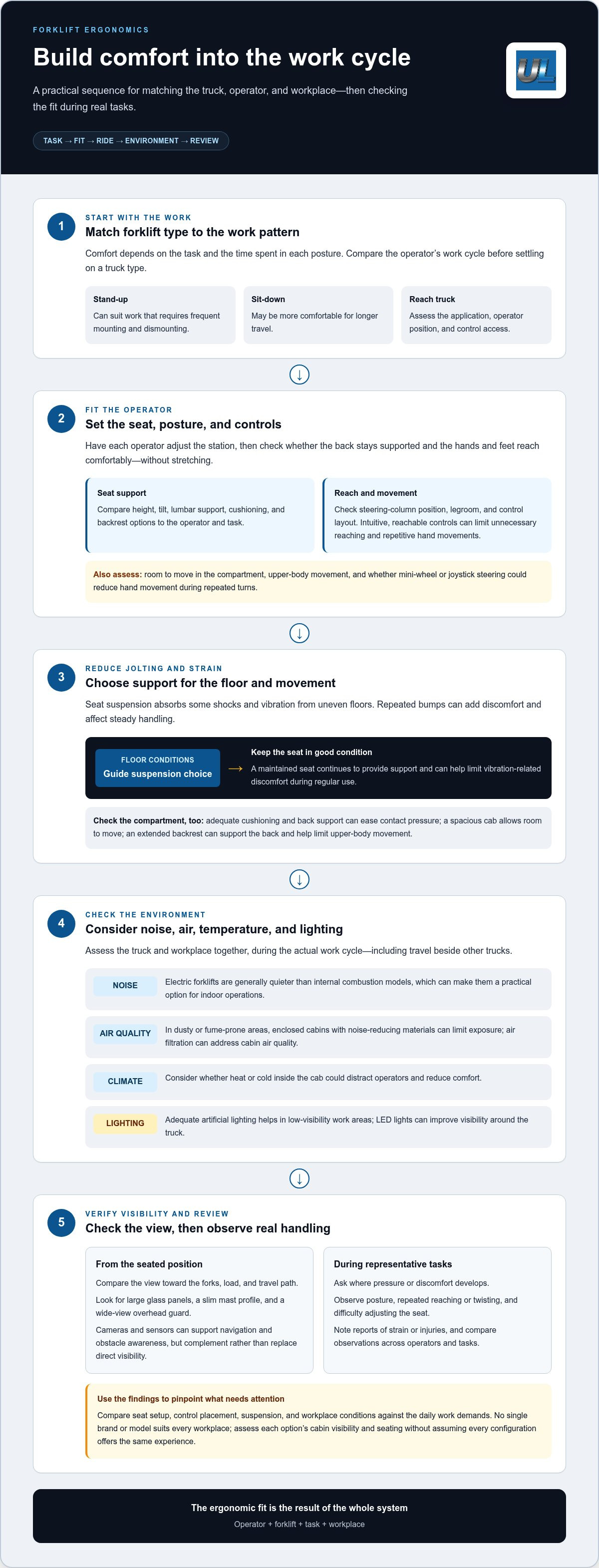
How forklift ergonomics affect operator health and productivity
Ergonomic design brings together operator posture, reach, and visibility with the vehicle’s functions. Operators may spend eight or more hours each day inside a forklift, so small fit problems can recur throughout a shift. Discomfort can affect concentration and productivity, while poor posture and repetitive movements can contribute to strain.
Consider a task that involves frequent reversing. Repeated twisting to look behind can strain the neck and back, while an uncomfortable seating position can make each turn harder. A rotating seat can help the operator look in different directions with less twisting. Intuitive controls and armrest-integrated joysticks can also reduce effort during repeated mast functions. These features can support a smoother work rhythm, but they do not replace safe operation.
In the United States, employers should consider ergonomic fit alongside OSHA forklift safety requirements. Assess seating, posture, control reach, vibration, and sightlines as part of the work setup. Ergonomic features can support comfort, but safe operating practices remain essential. For example, a clear view of the travel path matters as much as a comfortable seat when moving a load through a busy aisle.
What does an ergonomic forklift cost in the United States? The cost depends on truck type, application, power source, and selected configuration, including comfort-related features. Compare these factors with the tasks and workplace conditions rather than judging a vehicle by its seat alone.
A practical review links operator feedback to work demands. Note where discomfort arises, which tasks require repeated reaching or twisting, and whether jolts affect control. Then compare those observations with the vehicle’s available features and the work cycle. This helps identify changes that may reduce strain and distraction, supporting steady handling and addressing conditions that can contribute to accidents.
Use these priorities to explore forklift options suited to your operation’s work demands.
United Lift: Forklifts
United Lift LLC offers new and used forklifts for material handling operations. If operator comfort is part of your equipment decision, let the work guide your comparison: consider travel distance, floor conditions, load handling, visibility needs, and how operators use the truck throughout a shift.
Bring those priorities into your forklift selection. Weigh seat fit, control reach, suspension, and sightlines against the demands of your workplace. The right choice depends on how the equipment will be used, not on comfort features in isolation.
Ready to discuss forklift options for your operation? Contact United Lift LLC to explore the choices.
Make Operator Comfort Part of Your Next Equipment Decision
Turn operator feedback into a practical part of equipment planning. Ask which tasks feel demanding, where operators lose a clear view, and what makes a shift harder to manage. Their answers can help you compare equipment against real work conditions, not just a feature list.
Use those priorities to assess ergonomic forklifts for operator comfort alongside the demands of your operation. A thoughtful decision can support a more workable setup for operators and the people who depend on consistent material handling.
Ready to discuss your requirements? Contact United Lift about operator comfort. The right conversation can help you take a clear next step for your team.
Frequently Asked Questions
How can you make forklifts more comfortable?
Start by matching the operator’s position to the task and removing avoidable sources of pressure. Before a shift, adjust the seat and steering position, remove items from back pockets, and check that controls are reachable without awkward stretching. With shared equipment, repeat the setup for each operator rather than assuming one adjustment suits everyone. Note any discomfort that arises during particular tasks.
How do ergonomic forklifts improve safety?
Ergonomic features can support safer operation by helping operators stay comfortable, focused, and aware of their surroundings. A clear view of the load’s travel path, for example, can make obstacles easier to detect, while reachable controls avoid distracting stretches. Comfort features do not replace safe work practices. Consider how visibility, posture, and control access work together during actual travel and load placement.
What forklift features help reduce operator fatigue?
Supportive seating, suspension, intuitive controls, and a cab suited to workplace conditions can help ease the physical demands of repeated operation. The most useful combination depends on the work. A truck crossing uneven floors needs attention to vibration; frequent reversing makes visibility and operator movement especially important. Compare features with the tasks that fill the operator’s working day.
What ergonomic features improve forklift operator comfort?
Useful comfort features include adjustable seating, lumbar support, adequate legroom, reachable controls, and a layout that limits unnecessary movement. Cabin conditions matter, too: noise reduction, air filtration, and climate control can address environmental discomfort. Evaluate the entire operator position, not just one feature. A well-supported seat, for instance, offers less benefit if controls require frequent twisting or reaching.
What forklift seat adjustments and suspension reduce fatigue?
Seat height, tilt, and lumbar support help operators find a supported position, while suspension can soften the effects of uneven surfaces. Set adjustments for the person using the truck and the floor conditions they encounter. Check that the seat moves and supports the operator as intended. Worn cushioning or a seat that no longer adjusts properly can undermine comfort, so include seat condition in equipment reviews.
How do cab layout, controls, visibility, and noise affect forklift ergonomics?
These factors influence the effort needed to control the truck and understand the work area. A cramped layout can force awkward movements, obstructed sightlines can complicate load positioning, and noise can add distraction. Review a real workflow, such as approaching a pallet in a narrow aisle, and observe the operator’s view, reach, and cabin conditions throughout the task.
- Tags: adjustable seats, ergonomic forklifts for operator comfort, forklift ergonomics, forklift safety, material handling, operator comfort, operator health, warehouse equipment, workplace productivity
